
Safety doesn’t happen by accident.
Salmac is committed to maintaining a safe and healthy work environment for workers and members of the public. Every worker is expected to act safely at all times to ensure their welfare and that of others in the workplace. We are committed to identifying, assessing, and controlling workplace hazards, training our workers in safe work practices, and implementing risk management strategies to protect people and the company’s assets as far as reasonably practicable.
Leadership
Our leadership team is focused on safety and leads by example. We identify hazards and ensure risks are managed through the use of ARCP’s, SSSP’s, Prestart, and Toolbox Meetings.
Equipment and Training
We ensure our people are equipped and trained to do their job safely through our induction process, on-the-job training, external training courses, Equipment/PPE/RPE checks, and site safety audits.
Engagement
Our team is engaged in safety through induction, toolbox, and monthly meetings.

Occupational Health and Safety Policy
Purpose and Commitment
At Salmac Insulation, we are committed to protecting the health and safety, including physical and psychological well-being of our employees, contractors, subcontractors, visitors, and others affected by our operations. Whether installing insulation or handling and removing asbestos-containing materials, we carry out our work with care, caution, and a strong safety-first culture.
We firmly believe that nothing is so urgent or important that it cannot be done safely.
Scope
This policy applies to all Salmac Insulation operations, including residential, commercial, and industrial projects across both permanent and temporary worksites. It supports our Occupational Health and Safety Management System (OHSMS), which is established and maintained in accordance with ISO 45001:2018.
1. Our Commitment
Salmac Insulation is committed to:
-
- Preventing work-related injury and ill health, including psychological harm arising from psychosocial hazards such as stress, bullying, harassment or excessive workloads.
- Providing safe and healthy working conditions for all personnel under our control.
- Fulfilling all applicable legal and other requirements related to OH&S.
Systematically identifying hazards and reducing OH&S risks using the Hierarchy of Controls. - Promoting physical safety and mental well-being.
- Ensuring the active participation and consultation of workers and their representatives.
- Continually improving our OH&S management system and performance.
We are dedicated to building a proactive safety culture—one where everyone is empowered to speak up, take action, and contribute to safer outcomes.
2. Implementation
To achieve our OH&S objectives, we will:
- Lead with accountability – Assign and support clear roles, responsibilities, and authorities for OH&S at all levels of the organisation.
- Identify and control risks – Identify and control risks – Use structured tools such as ARCP, JSA, SSSP, SLAM, and our Critical Risk Register to systematically identify hazards, assess risks, and apply the hierarchy of controls, prioritising elimination of hazards where practicable, followed by substitution, engineering controls, administrative controls, and personal protective equipment as necessary to manage residual risks.
- Engage our people – Facilitate open communication and feedback through toolbox talks, safety meetings, SiteDocs, and direct involvement in risk control decisions.
- Train and inform – Ensure all personnel are trained, instructed, supervised, and equipped to carry out their work safely.
Support wellbeing and recovery – Provide systems that promote mental health and facilitate effective rehabilitation and return-to-work processes when injuries occur. - Respond and learn – Investigate incidents, act on findings, and implement corrective actions to prevent recurrence.
- Monitor and review – Use internal audits, inspections, and a Plan-Do-Check-Act (PDCA) approach to evaluate effectiveness and drive improvement.
- Prepare for emergencies – Ensure all workers are familiar with emergency procedures and maintain readiness through training and drills.
3. Legal and Other Requirements
Salmac Insulation complies with the Health and Safety at Work Act 2015, associated regulations, approved codes of practice, and other applicable obligations. We actively monitor legislative and industry developments to maintain compliance and continually improve our safety practices.
Supporting procedures and forms are maintained separately within Salmac’s document management system.
4. Policy Review and Communication
This policy is communicated to all workers and made available to interested parties via our website: www.salmac.nz. It is reviewed at least annually—or earlier if changes in operations, legislation, or the working environment occur—to ensure it remains relevant, effective, and aligned with our commitment to continual improvement.
Signed:
Gareth Lea
General Manager/ Director
Salmac Insulation Date: 01/11/2025
Please click to expand each policy.
Environmental Policy
Purpose
The purpose of this Environmental Policy is to outline Salmac Insulation’s commitment to minimising the environmental impact of its operations, ensuring compliance with all relevant legal and regulatory requirements, and promoting continuous improvement in our environmental performance.
This policy supports Salmac Insulation’s Occupational Health and Safety Management System under ISO 45001:2018 by addressing environmental hazards that may impact worker health, safety, or wellbeing (e.g., exposure to hazardous substances, asbestos, or pollution.
Scope
This policy applies to all Salmac Insulation operations, including insulation installation, asbestos removal, and any other activities conducted under our control at both permanent and temporary worksites. It covers all employees, contractors, and subcontractors involved in these activities.
Objectives
- To comply with applicable environmental laws, regulations, and best practices.
- To minimise waste and optimize recycling efforts across all operations.
To safely manage hazardous substances and reduce their impact on the environment. - To prevent pollution through effective management of emissions, spills, and other environmental hazards.
- To continuously improve environmental performance through regular monitoring, audits, and reviews
1. Legal and Regulatory Compliance
- Complying with all applicable environmental legislation, including the Resource Management Act 1991 (or successor legislation upon enactment), Health and Safety at Work (Hazardous Substances) Regulations 2017, regional/district plans, and conditions of any resource consents or permits.”
- Actively monitoring and adapting to legislative developments, including proposed reforms to resource management laws expected in 2026.
2. Waste Management
- Minimising waste generation and maximising recycling wherever possible.
- Ensuring waste is handled appropriately, using suitable personal protective equipment (PPE) and compliant disposal processes.
3. Hazardous Substances Management
- Storing, labelling, and disposing of hazardous substances in accordance with the Health and Safety at Work (Hazardous Substances) Regulations 2017.
- Ensuring hazardous substances are never disposed of improperly, such as by pouring them down drains or onto the ground.
- Maintaining up-to-date Safety Data Sheets (SDS) and a hazardous substance register.
Providing spill kits and necessary materials to manage potential hazardous substance spills of over 5 litres. - Taking immediate action to contain and recover any hazardous substance spill, and notifying the relevant emergency response teams as required.
- Ensuring compliance with applicable regional, town, or district plans and environmental regulations.
4. Asbestos Management
- Taking appropriate precautions when asbestos materials are suspected or identified on-site.
- Conducting an asbestos survey before demolition work to ensure the accurate identification and safe management of asbestos-containing materials.
- Conducting asbestos removal and disposal in accordance with the Health and Safety at Work (Asbestos) Regulations 2016, approved codes of practice, and relevant resource consent or regional rules for waste disposal to prevent environmental contamination.
5. Fire and Hot Work Management
Prohibiting unauthorised fires on-site and using hot work permits where necessary to ensure safe practices.
6. Energy Management
Minimising energy consumption wherever practical, to contribute to reducing environmental impact.
7. Environmental Nuisance Control
Ensuring that noise levels comply with the requirements of the relevant District or City Council regulations.
Controlling or suppressing dust emissions to prevent environmental nuisance.
8. Continual Improvement
- We are committed to continually improving our environmental performance and ensuring that this policy is communicated to all employees and relevant stakeholders.
- Monitoring and reviewing our environmental objectives, and integrating feedback to enhance the effectiveness of our environmental management practices.
- This Environmental Policy will be reviewed regularly to ensure its ongoing relevance and effectiveness in achieving environmental compliance and continual improvement.
9. Policy Review
- This policy will be reviewed annually or sooner in response to: significant incidents or near misses with environmental implications; changes in legislation (including RMA reforms); operational changes (e.g., new substances, sites); audit findings; or emerging environmental risks.
- Reviews will be documented, with updates communicated to workers and stakeholders.
Signed:
Gareth Lea
General Manager/ Director
Salmac Insulation Date: 01/11/2025
Accreditations and Associations
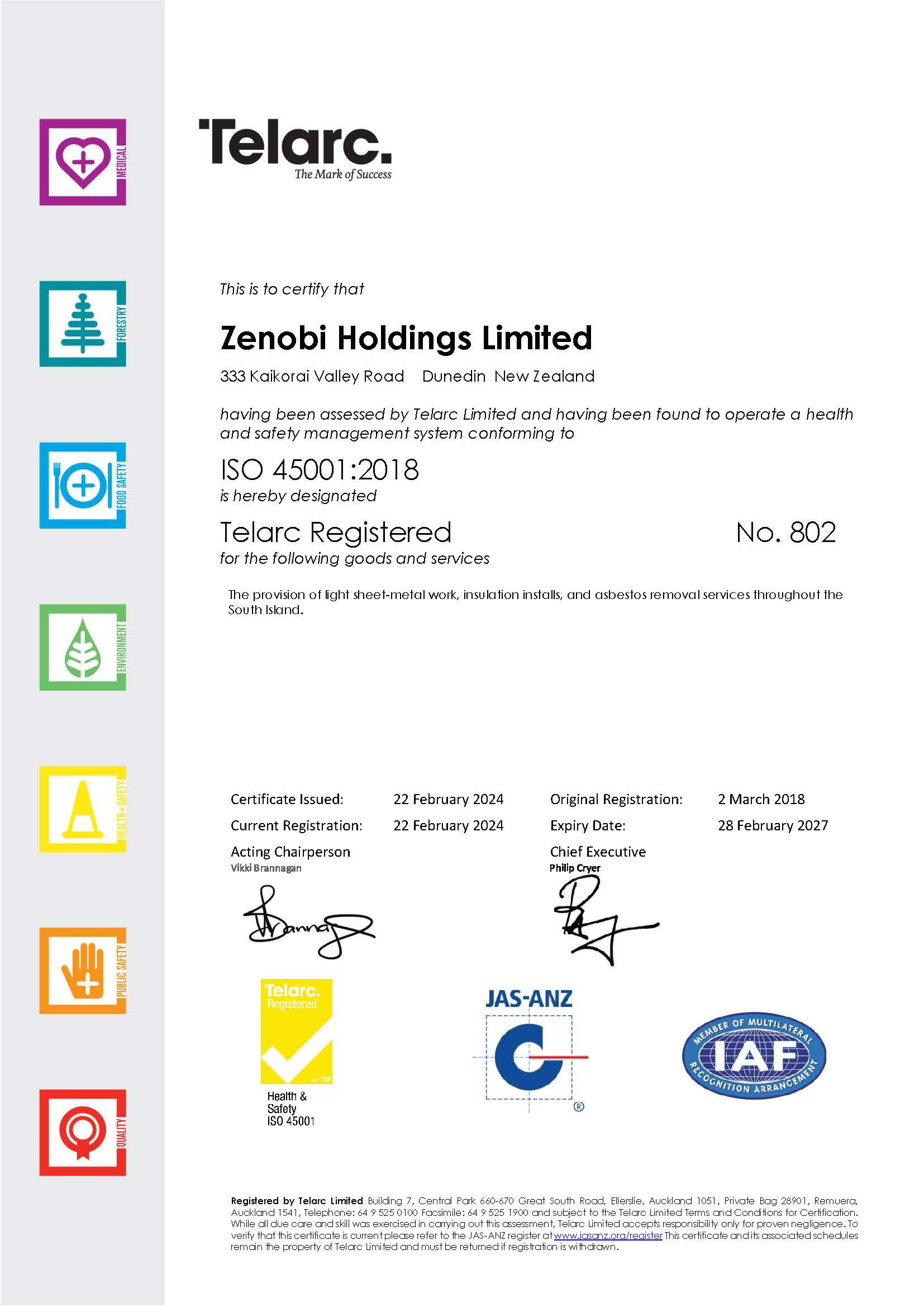
ISO 45001:2018
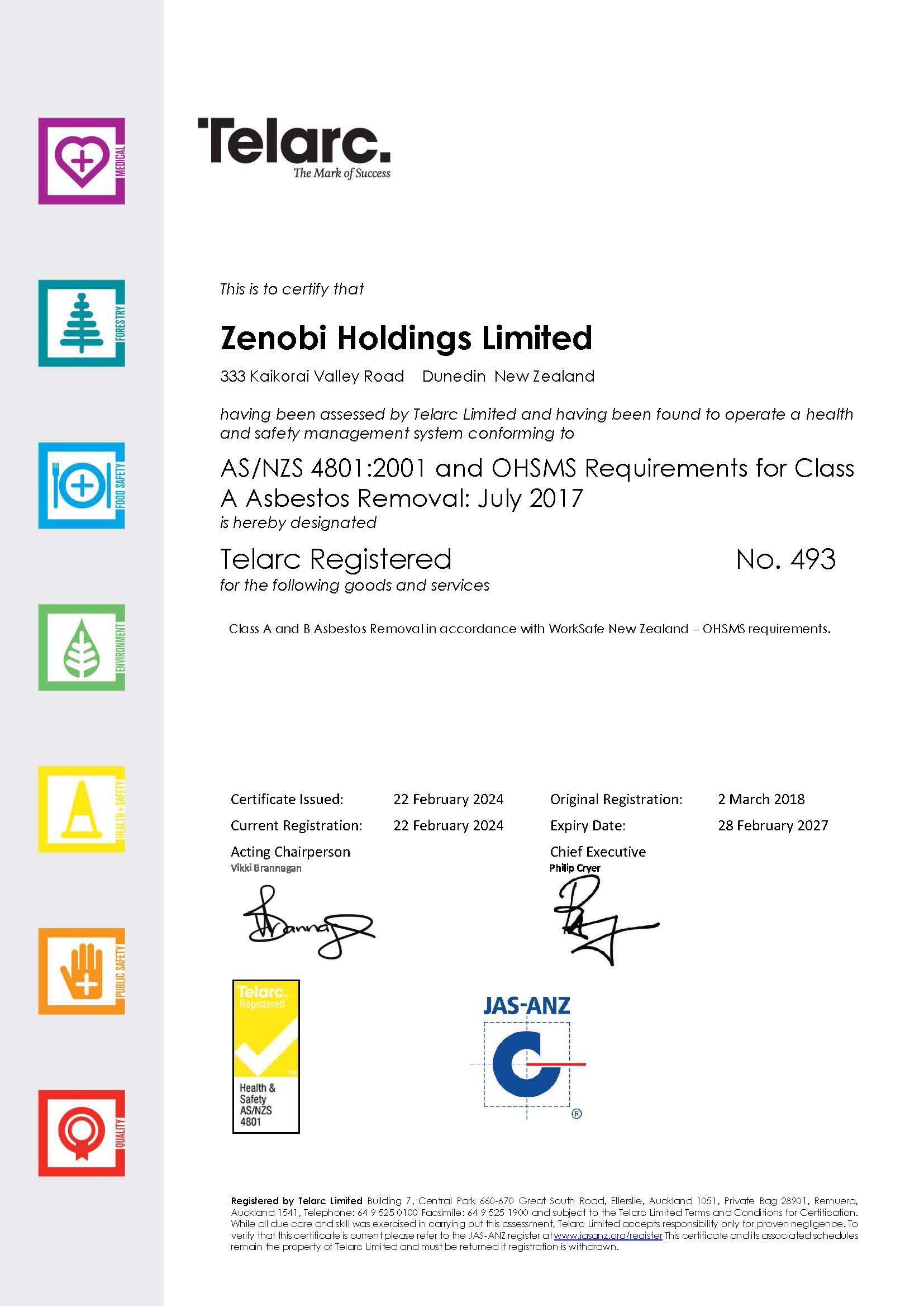
AS/NZS4801:2001- CAAR Scheme

Business South Inc Members
Registered Master Builders
Site Safe Member
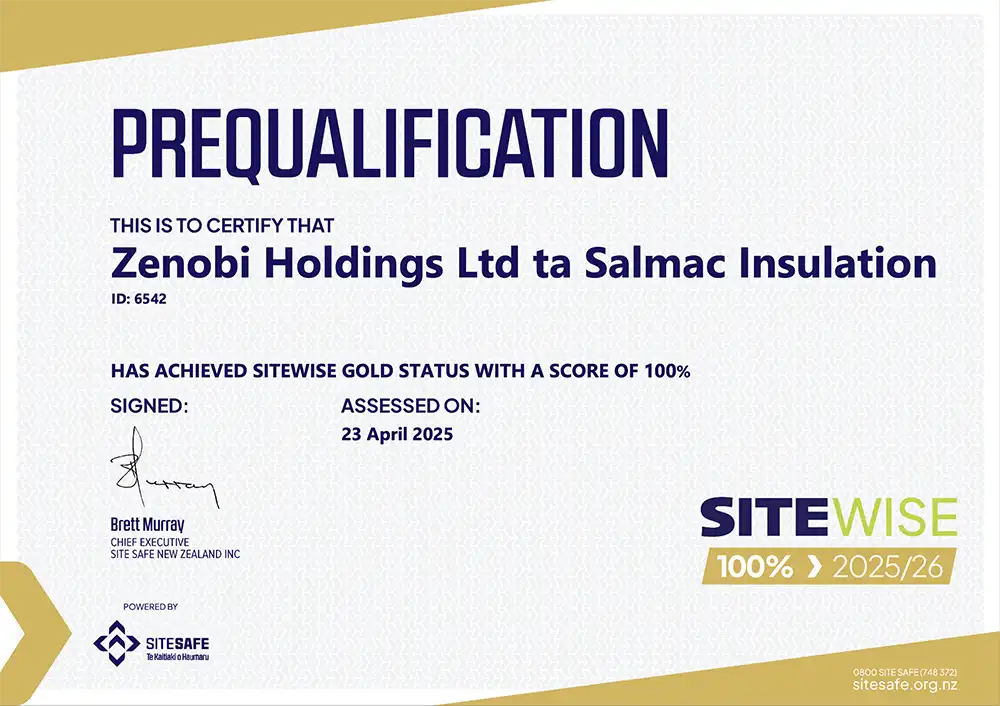
Site Wise Gold
Totika Health & Safety NZ
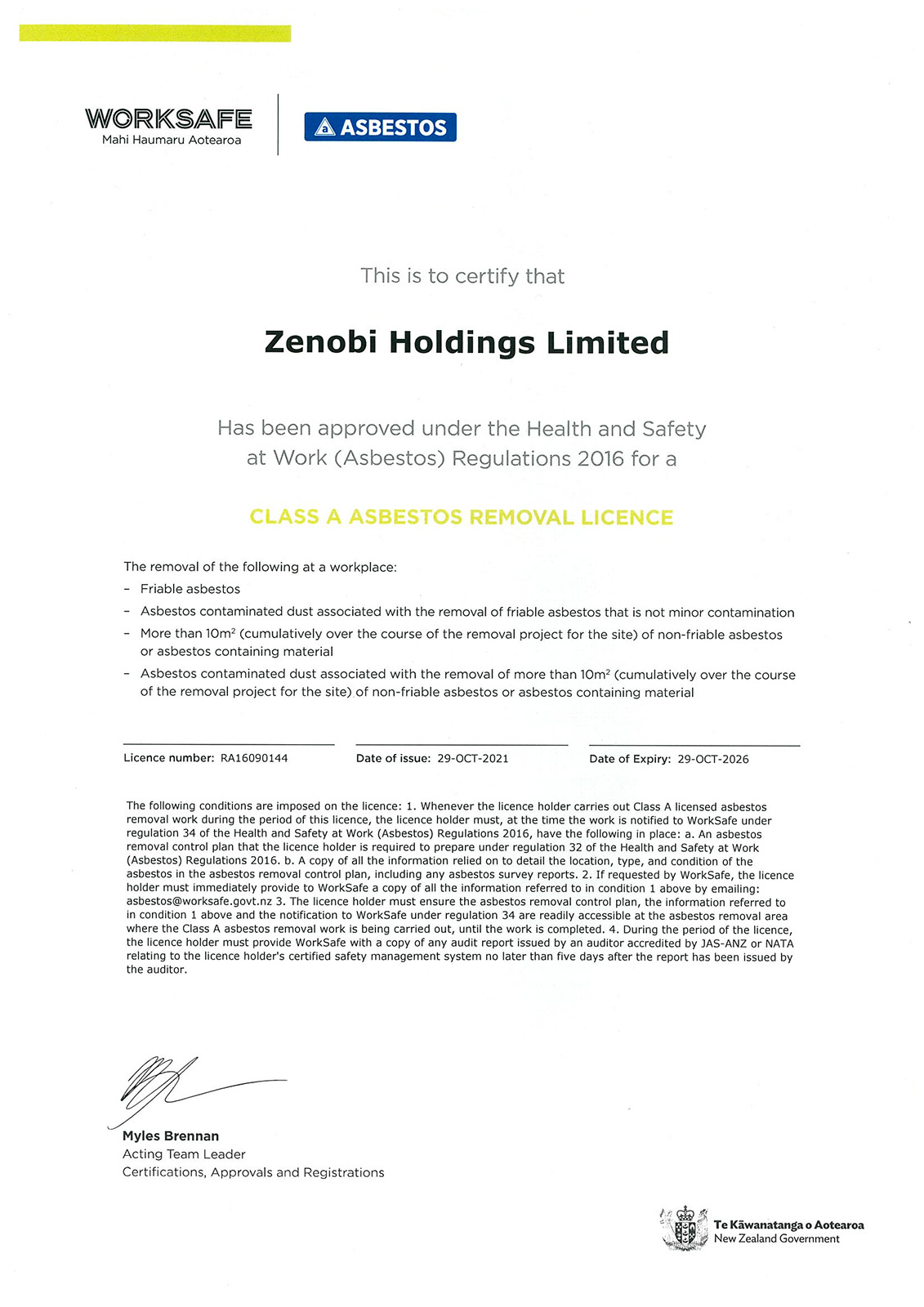
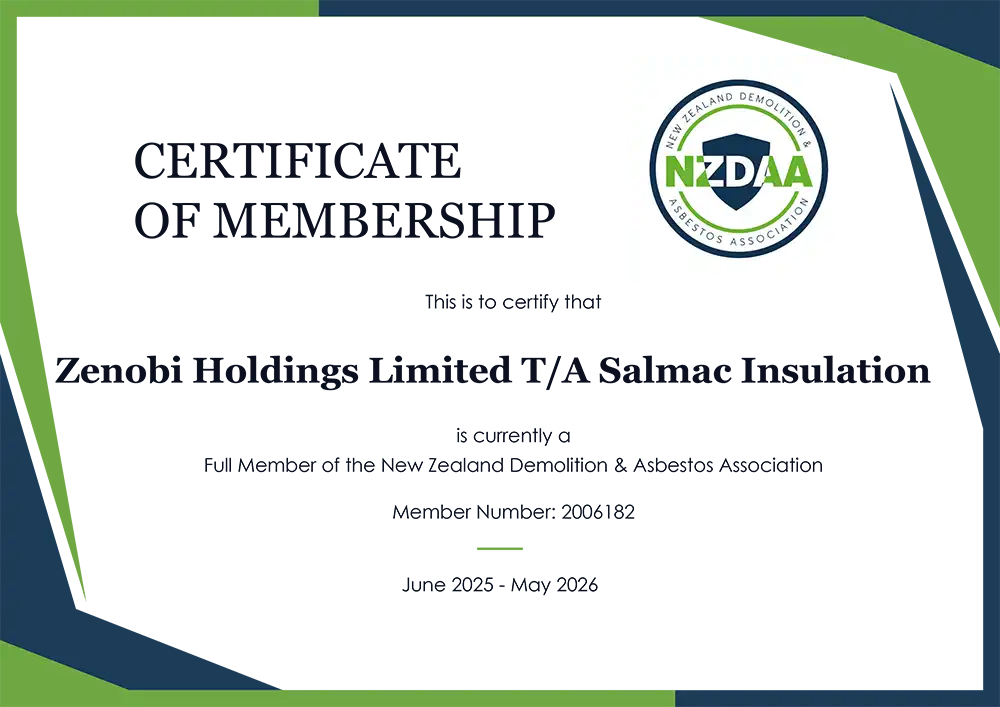
Certificates and Asbestos Licence Holder Register
Servicing Otago
Alexandra | Arrowtown | Balcutha | Beaumont | Bendigo | Bucklands Crossing | Cardrona | Clinton | Clydevale | Cromwell | Dunedin | Gibbston | Glenorchy | Hampden | Heriot | Hyde | Lake Hāwea | Kaka Point | Kakanui | Kingston | Lawrence | Makarora| Middlemarch | Miller Flat | Milton | Moeraki | Maheno | Momona | Mosgiel | Ngapara | Nasby | Oamaru | Oturehua | Owaka | Palmerston | Papatowai | Patearoa | Port Chamlers | Queenstown | Ranfurly | Roxburgh | Saint Bathans | Tapanui | Tarras | Waihola | Wanaka
Website Inquiry
Contact us
If you have questions about our asbestos services or insulation within Otago, please contact us today.
333 Kaikorai Valley Rd
Bradford, Dunedin 9011
Weekdays : 8.00am - 4.30pm